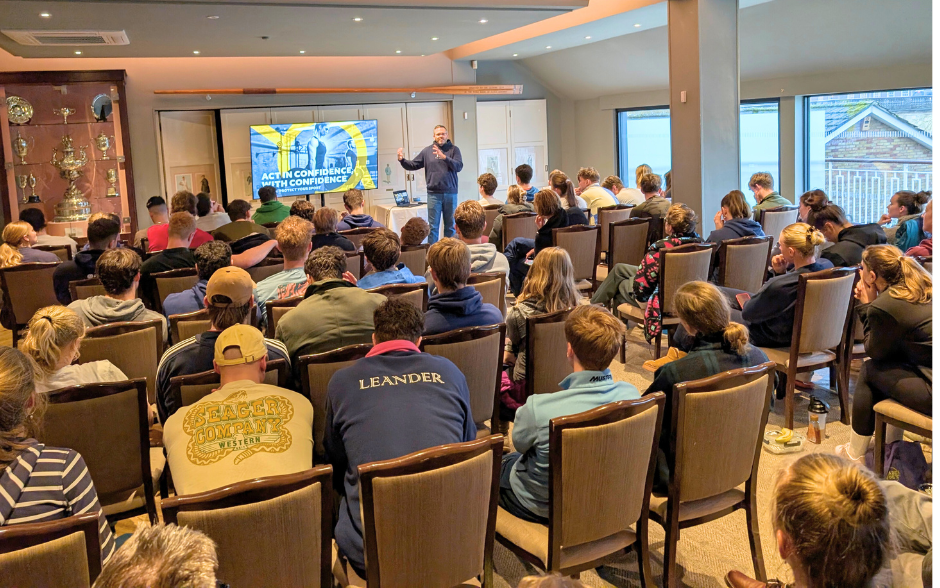
More than 70 athletes, coaches and support staff from Leander Club took part in a hard‑hitting clean sport workshop this week, led by British Rowing’s Governance and Integrity Lead, Richard Nunn.
The session opened with a competitive twist: a timed, ranked quiz designed to test athletes’ knowledge of anti‑doping rules. But the real lesson came at the end, when Nunn revealed that the two “winners” had been given the answers in advance – a pointed demonstration of how even small advantages can undermine fairness in sport.
Chief Men’s Coach Matt Beechey said the message was clear. “This is part of our commitment to clean sport. Rowers generally don’t cheat, but they can get caught out taking a supplement with a prohibited substance or one that has been contaminated during production.”
Staying Ahead of the Rules
Nunn reminded athletes that the World Anti‑Doping Agency’s Prohibited List is updated every January, and even minor changes can have major consequences. This year, the permitted dosage of the asthma medication salmeterol has been reduced – one of many updates affecting substances found in everyday medications, from cold remedies to ADHD treatments, diabetes drugs, hormones, steroids and recreational drugs.
The responsibility, he stressed, lies entirely with the athlete.
“You are solely responsible. You need to know about everything you put in your body,” he said.
A recent example came from outside rowing: international tennis player Jannik Sinner received a three‑month ban after a steroid cream used by his physiotherapist entered his system.
Testing Reaches Every Level of the Sport
Anti‑doping controls aren’t limited to elite international events. At last year’s Head of the River Race, three men from every crew were randomly selected for testing. Once notified, athletes are chaperoned continuously until they provide a urine or blood sample.
To help athletes navigate medication safely, Global DRO remains the primary checking tool – though it does not cover every country’s products. Those travelling for training camps are advised to bring pre‑approved medication with them.
Where no permitted alternative exists, athletes may apply for a Therapeutic Use Exemption (TUE). Those in the GB testing pool or competing at major domestic and international events must apply in advance; all other rowers may apply retrospectively.
Supplements: A Hidden Risk
Nunn highlighted a 2024 Australian study showing that 35% of tested supplements contained prohibited substances, often due to mislabelling or contamination. The affected products ranged from protein powders, energy gels, pre‑workout drinks – even cod liver oil and fortified cereals.
Athletes were urged to use only supplements batch‑tested by Informed Sport, and to check every detail: test date, batch number and expiry.
“We advise athletes to take a ‘food first’ approach, emphasising hydration, a sufficient, well‑balanced diet, quality training and rest,” Nunn said.
Athletes were advised to keep notes; they should also be able to recall every medication or supplement taken in the previous seven days.
Knowing Your Rights
The workshop also covered athlete rights during the testing process. Competitors are entitled to:
- Request identification from doping control officers
- Be accompanied at all times
- Request a delay for racing, cooling down, media duties or medical treatment
- Receive confidential copies of all paperwork
- Record notes throughout the process
A Growing Testing Landscape
In 2023, 167 British rowers were tested by UK Anti‑Doping, with additional tests conducted by World Rowing – a reminder that vigilance is essential at every level of the sport.
The session at Leander Club underscored that clean sport is not just about avoiding wrongdoing; it’s about education, responsibility and protecting the integrity of rowing for future generations.


